JELL-EDWebinars
REPLAY + DOWNLOADABLE RESOURCES NOW AVAILABLE
Research Starts on Day One: Building Research Competency Across the Dental Hygiene Curriculum
September 15, 2026, 8:00 PM EST / 7:00 PM CST / 5:00 PM PDT
Preparing graduates to practice evidence-based dental hygiene requires more than teaching literature searches or assigning a single research paper. Students should progressively develop the ability to locate, critically evaluate, apply, and ultimately contribute to scientific evidence throughout their educational experience.
This webinar explores two complementary curriculum models: integrating research competencies across the dental hygiene curriculum and implementing a dedicated research course. Participants will examine strategies for scaffolding research skills beginning in the first semester, fostering critical appraisal of scientific literature, developing faculty and community mentorship models, and culminating in scholarly projects suitable for presentation or publication.
Course Presenter:
Lory Laughter, MS, RDH
Objectives:
At the conclusion of this webinar participants will be able to:
- Describe two curricular models for developing research competency in dental hygiene education through either integrated instruction or a dedicated research course.
- Design a scaffolded approach that progressively builds students' abilities to locate, critically evaluate, and apply evidence beginning in the first semester.
- Identify mentorship and capstone strategies that support student scholarship, dissemination of findings, and preparation of publication-quality projects.

Recall Is Not Response: Teaching Medical Emergencies That Hold Up in Clinic
August 18, 2026
This course equips dental hygiene faculty with the knowledge and tools to teach and assess medical emergency management effectively. Topics include identifying emergencies that are increasingly relevant to today’s patient populations, distinguishing competency-based response from protocol recall, selecting emergencies that align with the program’s clinical setting, and using performance-based assessments that evaluate student decision-making under pressure. Faculty will leave with three practical assessment formats and a ready-to-use teaching kit to strengthen emergency preparedness in the curriculum.
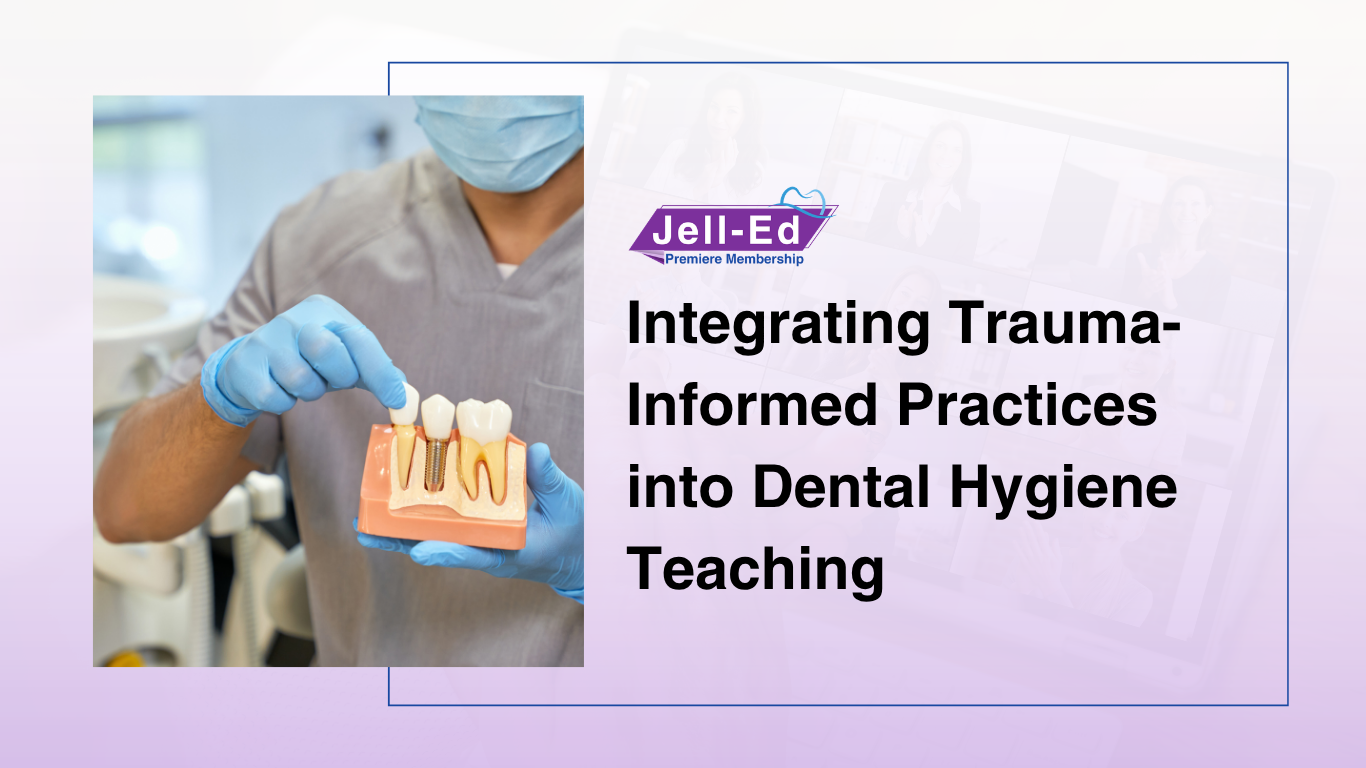
Integrating Trauma-Informed Practices into Dental Hygiene Teaching
April 21, 2026
This course equips dental hygiene faculty with the knowledge and tools to teach trauma-informed care effectively. Topics include understanding trauma prevalence, adapting communication techniques, modifying clinical routines to minimize retraumatization, and fostering a supportive environment where students learn to deliver compassionate, patient-centered care. Faculty will leave prepared to embed trauma-informed principles throughout the curriculum.
Elevating the Curriculum with Desiccation Therapy: Why and How to Teach it
March 24, 2026
This webinar provides a clinically focused overview of desiccation therapy in periodontal care. The session covers the mechanism of desiccation agents for disrupting biofilm and aiding nonsurgical periodontal procedures, reviews supporting clinical evidence, and discusses comparative outcomes with other adjuncts. Participants will examine when and why to incorporate desiccation therapy in dental hygiene education, and learn practical approaches for curriculum integration to enhance student preparation for modern clinical practice.

Mastering AAP Staging and Grading: Tips, Case Reviews, and Teaching Shortcuts
February 17, 2026
This webinar provides a review of the AAP staging and grading classification, designed for educators and clinicians who seek clarity in both understanding and teaching the system. The session focuses on practical approaches, offering stepwise strategies, simplified explanations, and case-based discussions. Participants will leave equipped with actionable tools to teach and implement staging and grading in their dental hygiene programs and clinical practice

Faculty Calibration
January 20, 2026
This webinar will explore the importance of faculty calibration for the coordination of dental hygiene instruction to ensure effective student learning, adhere to CODA standards, as well as calibration exercises for incorporation into faculty in-services.
Trends, Trials, and Triumphs in Dental Hygiene Education: Unfiltered
December 9, 2025
Join JELL-ED’s final webinar of the year for an interactive panel discussion addressing pressing challenges and hot topics in dental hygiene education. This dynamic session will bring together experienced educators to explore issues such as faculty recruitment and retention, accreditation essentials, faculty calibration, integration of standard-of-care equipment, national board exam readiness, mental health in academia, and more.
Empowering Adjunct Clinical Faculty: Educational Methodology for Dental Hygiene Programs
November 18, 2025
This course is designed for part-time and adjunct clinical faculty in dental hygiene education. Participants will explore fundamental principles of teaching and learning, effective communication, feedback strategies, student assessment, and calibration techniques. The course provides adjunct faculty with practical tools to navigate their teaching role confidently while aligning with program goals, accreditation standards, and best practices in dental hygiene education.
Beyond Technique: Fostering Soft Skills and Humanistic Values in Dental Hygiene Education
October 14, 2025
This interactive webinar explores the integration of humanistic values and soft skills into dental hygiene education. Humanism upholds both students and faculty to high standards of respect, professionalism, and empathy while fostering a supportive classroom culture. Participants will practice strategies for teaching communication and empathy and design activities that strengthen professional growth and patient-centered care.
Modernizing Your Infection Control Curriculum: Strategies for Today’s Dental Hygiene Programs
May 19, 2026
This course empowers dental hygiene educators to stay ahead in the fast-changing landscape of infection control. Attendees will explore evidence-based updates, regulatory changes, and practical solutions for modernizing infection control curricula—even within programs that are slow to adapt. The session offers actionable strategies to ensure graduates are prepared for excellence in both compliance and best practices, supporting safe and adaptive educational environments.